Landed Cost for Imported Snacks: From Carton to Shelf Price
A practical walk-through of landed cost for imported snacks, starting from real carton data and ending with a shelf price you can defend to your finance team.
Read more
Clean Label
Children notice colour before almost anything else. A pink cracker, an orange crisp or a green sweet gets picked up first, which is exactly why food makers care so much about it. If you have started looking more closely at the snacks you buy, you may have wondered whether natural food colouring in snacks is really better than the synthetic kind, or whether it is just a nicer word on the front of the pack.
The honest answer sits somewhere in the middle. This guide explains what each type of colour actually is, why some families prefer to avoid synthetic colours, what natural colours do well and less well, and how to read a label in the time it takes to queue at the till. No guilt, no scare stories, just enough to help you choose with confidence.
Synthetic colours, sometimes called artificial colours, are made by chemical synthesis rather than taken from a plant, fruit, vegetable or mineral. They were developed because they are cheap, very bright and extremely stable. A small amount gives a strong, even shade that does not fade on the shelf or change when the food is heated.
On ingredient lists you may see them by name, such as tartrazine, sunset yellow, allura red or brilliant blue, or by an E number in markets that use them. Some packs simply say "colour" or "colouring" followed by a code. They are permitted by food regulators within set limits, so their presence does not mean a product is unsafe. It simply means the colour did not come from a food source.
Natural colours come from things that exist in nature: vegetables, fruits, spices, algae and a few other sources. Familiar examples include:
There are two broad ways these end up in food. Some products use the vegetable or fruit itself, or a concentrate of it, which you will often see described as coloured with vegetable or fruit concentrates. Others use a colour that has been extracted and purified from a natural source, which may still carry an E number. Both are legitimate, but if you prefer to see a recognisable food on the label, the first kind is easier to spot.
One detail worth knowing: carmine, also called cochineal, is a natural red that comes from insects. Some families avoid it for vegetarian, cultural or religious reasons, so it is worth checking for if that matters in your home.
For many years there has been discussion about whether certain synthetic colours might affect activity and attention in some children. Research in this area has been debated, and the effect, where reported, appears to vary from child to child. In the UK and European Union, foods containing six particular synthetic colours must carry a label saying they may have an adverse effect on activity and attention in children. Many manufacturers there chose to reformulate rather than print that warning.
Other parents simply prefer to keep things recognisable. If a snack is meant to be a small, everyday part of a child's day, they would rather its colour came from beetroot than from a code they cannot picture. That is a reasonable preference, not a fear.
If you have specific concerns about your child's behaviour, sensitivities or diet, the best person to talk to is your doctor or paediatrician rather than a label or an article.
Natural colours are not a magic upgrade with no downsides. Knowing their quirks will save you from wondering why a product looks different from one pack to the next.
| Point | Synthetic colours | Natural colours |
|---|---|---|
| Brightness | Very bright, vivid shades | Usually softer and more muted |
| Consistency | Almost identical every batch | Can vary slightly with harvest and season |
| Heat and light | Very stable | Some fade or shift with heat, light or time |
| Taste | No taste at normal levels | Usually neutral, occasionally a faint note of the source |
| Recognisability | Names and codes can be unfamiliar | Often a food you already know |
A few practical points follow from this. A naturally coloured snack may look a little less dramatic than its synthetic neighbour on the shelf, and that is normal. A slightly different shade between packs is not a fault. And "natural" does not mean "free from allergens": some natural colours, such as annatto or carmine, can cause reactions in a small number of people, so children with known allergies should follow their doctor's advice on what to avoid.
You do not need to memorise a list of E numbers. A quick, calm routine works well:
If you would like a fuller walk through the whole pack, not just colours, the other articles in our guides section cover reading labels in more detail.
It is easy to fixate on one ingredient and lose sight of the bigger picture. A child who has the occasional brightly coloured sweet at a birthday party is not being harmed by a single slice of cake. What tends to matter more is the overall pattern: plenty of whole foods, regular meals, sensible snack portions and water to drink.
Natural colours are a good reason to choose one snack over another when everything else is equal. They are not a reason to feel anxious every time your child eats something pink or orange at a friend's house. Choose well where you can, relax where you cannot, and remember that for young children, how a snack is eaten matters too: sitting down, supervised, with a portion that suits their age, especially for anything crunchy.
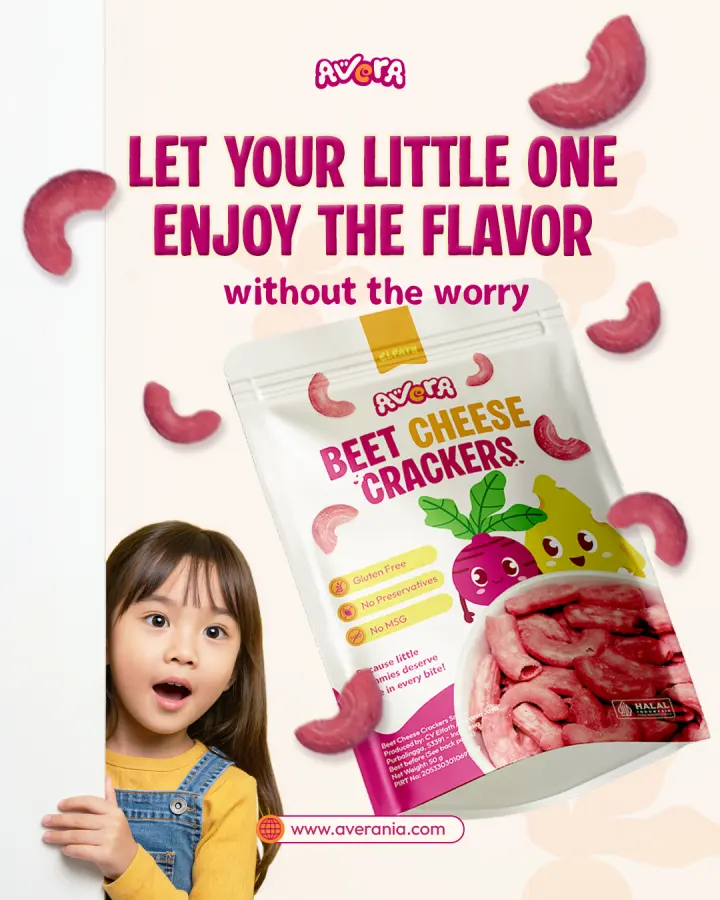
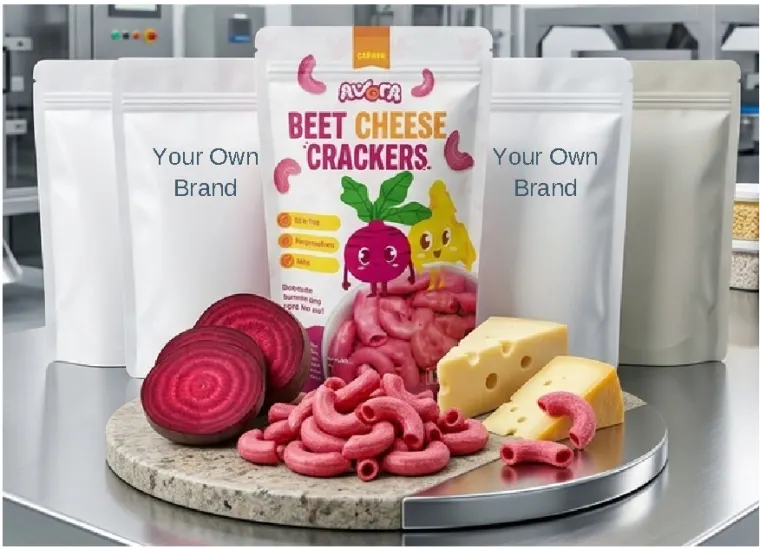
When we began making crackers in a home kitchen, we wanted the colour to be something a mother could recognise straight away. The pink in AVERA Beet Cheese Crackers comes from fresh beetroot, with no synthetic colours, alongside natural cheese and gluten-free cassava flour, fried in pure coconut oil. If you would like to see the full ingredient list and flavour variants, you will find them on our products page, and the story behind the brand is on our about page.
Natural colours from foods such as beetroot, carrot and turmeric are widely used and generally well tolerated. That said, natural does not mean allergen-free, and a small number of people react to colours such as annatto or carmine. If your child has known allergies or a medical condition, follow your doctor's or paediatrician's advice.
In the UK and European Union, foods containing six particular synthetic colours must carry a label saying they may have an adverse effect on activity and attention in children. The evidence behind this has been debated and any effect seems to vary between children. Many manufacturers chose to switch to natural colours rather than use the warning.
Colours from vegetables and fruits vary slightly with the harvest and season, and some can soften with heat, light or time. A small difference in shade between packs is normal and is not a sign that anything is wrong. Synthetic colours stay more uniform because they are made to an exact specification.
A practical walk-through of landed cost for imported snacks, starting from real carton data and ending with a shelf price you can defend to your finance team.
Read more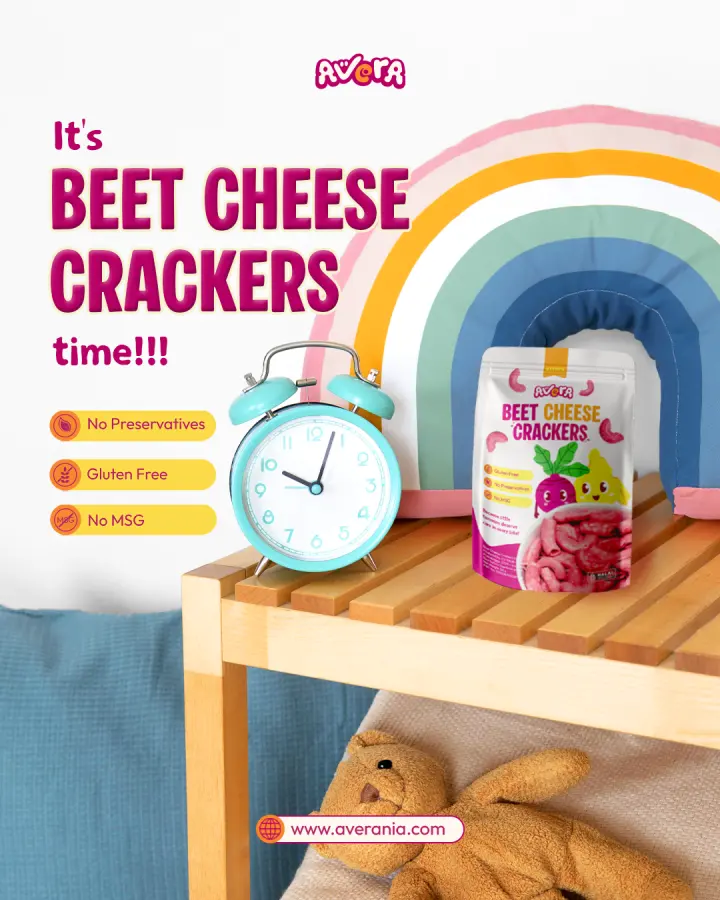
Some children need to avoid gluten completely, and many families simply prefer to eat less of it. Here is how to tell the difference, read labels with confidence and choose snacks without worry or guilt.
Read more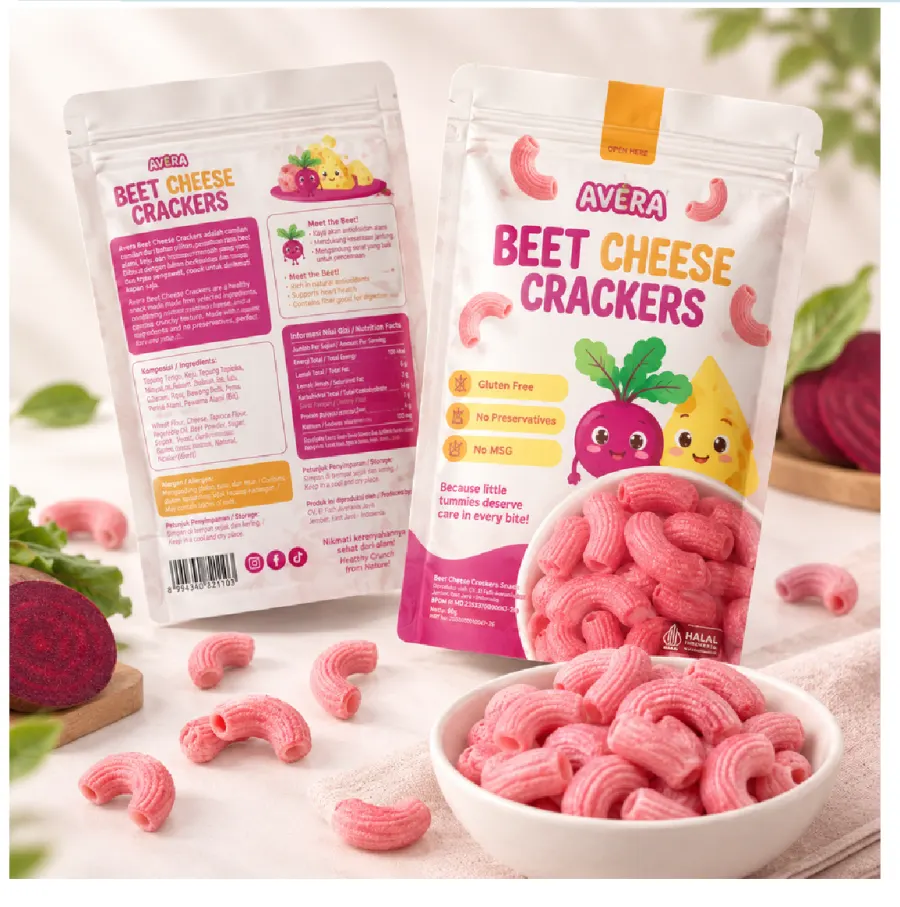
A buyer's guide to the three-layer PET/ALU/LLDPE pouch: what each layer does, why it matters for a preservative-free fried snack, and what it changes for shipping, storage and private-label planning.
Read more