Landed Cost for Imported Snacks: From Carton to Shelf Price
A practical walk-through of landed cost for imported snacks, starting from real carton data and ending with a shelf price you can defend to your finance team.
Read more
Retail Buying
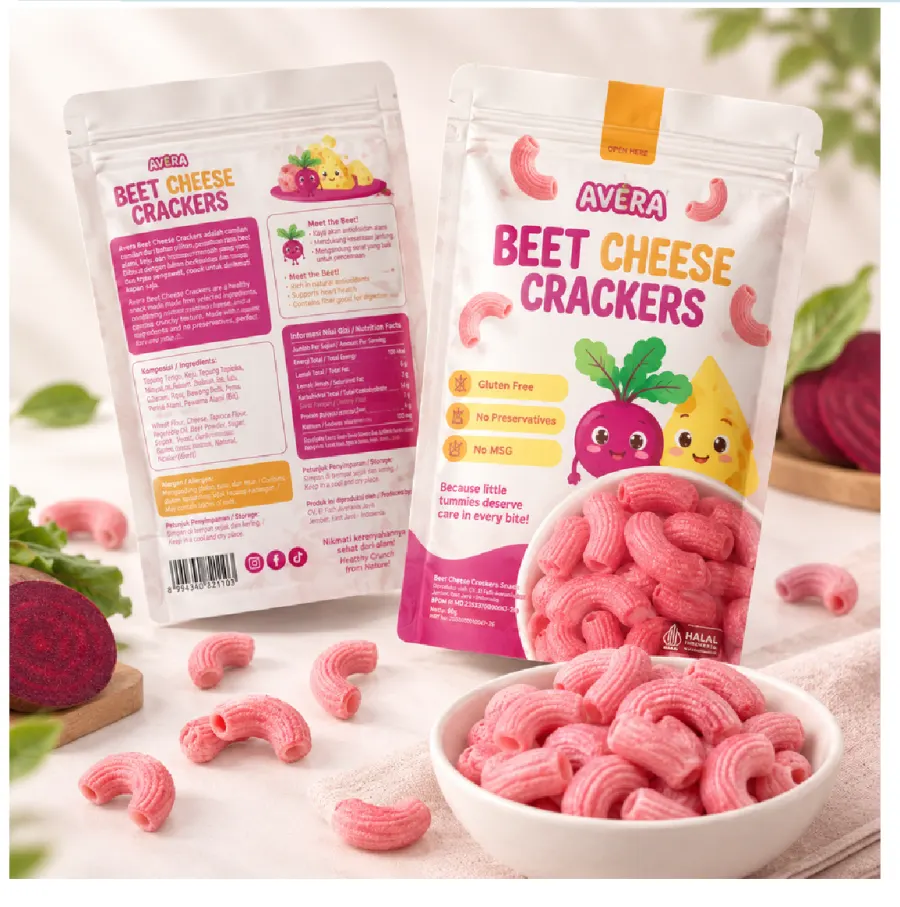
If you buy for a supermarket aisle, an e-commerce store or an import business, you will have noticed parents turning packs over before they put them in the basket. That habit has changed what a children's snack needs to be. Sourcing clean label kids snacks wholesale is less about finding something that sounds healthy and more about finding a product whose promise holds up on the shelf, in your compliance file and, most importantly, in a child's hand.
Having talked through this with many buyers, the same handful of questions keep coming up. None of them are complicated, but skipping any one tends to show up later as slow sell-through, a relabelling job or a delisting. Here is how we would think about it if we were sitting on your side of the table.
The first test is simple: read the back of the pack as a tired parent would, in a few seconds. A clean-label product should be understood without a search engine. Short lists of recognisable foods win. Long lists with stabilisers, flavour enhancers and colour codes lose, however good the front of the pack looks.
Look for whether the appealing features are carried by real ingredients rather than additives. If a snack is bright pink, where does the colour come from? If it tastes of cheese, is there actual cheese in it? Parents increasingly spot the difference between a product that is clean by design and one that has simply removed the most notorious additive and kept the rest.
It is also worth checking what has been used to get texture and shelf life without the usual shortcuts. That usually comes down to process and packaging, which is a good conversation to have with any supplier.
A claim that is perfectly acceptable in one country can need rewording in another. Phrases such as "no preservatives", "no MSG", "gluten-free" or "natural colours" are attractive to parents, but many markets set specific conditions on how free-from and natural claims may be worded and substantiated. Gluten-free in particular often carries a defined threshold and may need supporting test results.
Before you list, ask the supplier which claims they make, what evidence sits behind each one, and be prepared to have your own regulatory adviser check the final artwork against local rules. Allergen labelling deserves the same care. A cheese cracker contains milk, and the way that must be declared varies by destination. A good supplier will expect these questions and will not be defensive about them.
Equally, steer clear of health promises. A children's snack can be made carefully and simply, but it should not be sold as something that improves development or protects against illness. Those claims are usually unlawful and they erode trust with exactly the parents you want to keep.
Clean label gets the first sale. Taste gets the second. Many better-for-you children's snacks look right on paper and then sit on the shelf because children simply do not ask for them again.
When you sample, involve children if you can, and pay attention to texture as much as flavour. A snack that is crunchy but not hard, savoury but not overly salty, and easy for small hands to pick up tends to do well. Shape matters more than adults expect; something playful gets eaten. Also note that crunchy snacks should carry sensible age guidance, and parents of very young children will want to supervise and offer small, age-appropriate portions.
The practical details decide whether a product is easy or awkward to carry. Pack size affects price point and whether it suits lunchboxes or family sharing. Shelf life affects how much stock you can hold and how far it can travel. Carton configuration affects pallet efficiency and how often your stores need replenishing.
As an example of the kind of data you should be able to get straight away, these are the standard figures for AVERA Beet Cheese Crackers:
| Item | Specification |
|---|---|
| Shelf life | 12 months |
| Standard pack | 50 g stand-up pouch, 13 x 20 x 6 cm |
| Pack material | PET / ALU / LLDPE |
| Packs per carton | 35 |
| Master carton | 47 x 31 x 22 cm, 1.75 kg net, 0.032 m3 |
If a supplier cannot give you figures like these quickly, that tells you something about how ready they are for retail. Fuller product details are on our product page.
Natural products are honest products, but they can vary. A colour that comes from a vegetable may shift slightly between harvests; a cheese-led flavour depends on consistent sourcing. What you need to know is how the supplier controls that variation.
Ask about the food-safety system in place, how ingredients are checked on arrival, how finished product is inspected, and whether each pack carries batch and expiry coding so that any issue can be traced. Ask for a Certificate of Analysis and copies of relevant certifications during evaluation, and check them against what your market and your own quality team require. Halal certification, for instance, can open doors in some channels and be essential in others. You can see how we approach this on our certification page.
A promising pilot is only useful if the supplier can follow it with steady volume. Ask for realistic monthly capacity, how it is planned around other orders, and what happens when you want a new flavour or a different pack. Ask whether they can support a small trial before committing to scale, and how pricing, minimum order quantities, lead times and Incoterms are set out in writing. These should always be confirmed in a formal quotation rather than taken from a conversation.
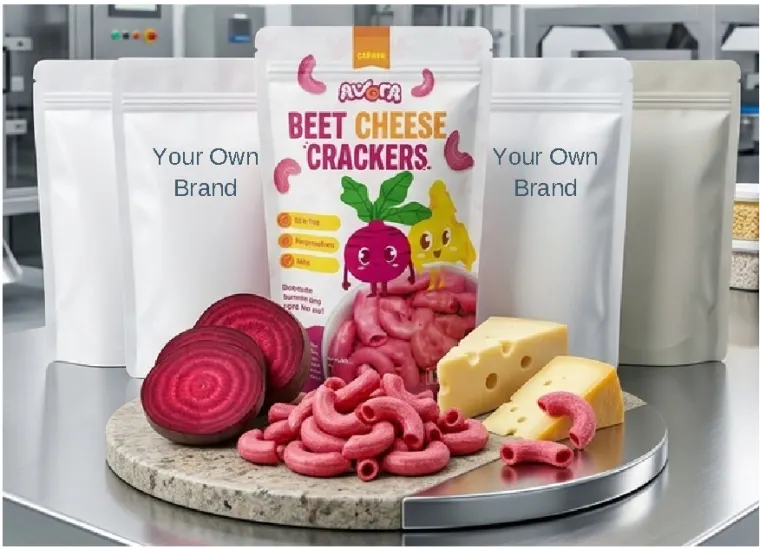
If you are considering your own brand rather than carrying theirs, find out how far formulation and packaging can be adapted, and whether the supplier already works with other brand owners on that basis.
No product is perfect for every shelf, and it is better to know the trade-offs early.
Being clear about these points with your own buyers and customers tends to build more loyalty than overselling.
AVERA Beet Cheese Crackers began in a home kitchen in Purbalingga, Central Java, with the aim of making a snack mothers could trust. They are made with natural cheese, fresh beetroot and gluten-free cassava flour, fried in pure coconut oil, with no preservatives, synthetic colours, artificial sweeteners, flavour enhancers or artificial texturisers. If that matches what your shelf needs, you are welcome to request samples and specifications and judge them against everything above.
Buyers generally look for a short ingredient list made of recognisable foods, with appealing features such as colour and flavour coming from real ingredients rather than additives. The claims on the pack also need to be substantiated and worded to meet the rules of the destination market. Taste and repeat purchase matter as much as the ingredient list.
Yes. Many markets set specific conditions for free-from and gluten-free claims, and gluten-free often requires supporting test results against a defined threshold. Ask the supplier for the evidence behind each claim and have your regulatory adviser review the final label for your market.
Cheese crackers contain milk, so they are not suitable for children with a milk allergy, and parents managing allergies or coeliac disease should follow their doctor's or paediatrician's advice. Crunchy snacks should also carry sensible age guidance, and young children should be supervised and offered small, age-appropriate portions.
A practical walk-through of landed cost for imported snacks, starting from real carton data and ending with a shelf price you can defend to your finance team.
Read more
Some children need to avoid gluten completely, and many families simply prefer to eat less of it. Here is how to tell the difference, read labels with confidence and choose snacks without worry or guilt.
Read more
A buyer's guide to the three-layer PET/ALU/LLDPE pouch: what each layer does, why it matters for a preservative-free fried snack, and what it changes for shipping, storage and private-label planning.
Read more